The Shift of Leadership: The Great Leap Forward
  • Home
  • Mao's Communism
    • Mao's Background
    • Idolized by His People
    • Great Leap Forward Gallery
  • Cultural Revolution
    • Cause and Effect
  • Rise of Deng
    • Deng's Background
    • Change of China
  • Leadership and Legacy
    • Fame in The World
  • Required Materials
    • Annotated Bibliography
    • Interview Transcripts >
      • Shui Chow
      • Asst. Professor Jeremy Murray
      • Professor Jeffrey Wasserstrom
    • Process Paper

"... in the early 1950s under the First Five Year Plan, the Party leadership headed by Mao Zedong considered the conditions ripe for a Great Leap Forward in early 1958."
http://chineseposters.net/themes/great-leap-forward.php


Great Leap Forward Gallery


Move pointer to pictures to view caption

Click pictures for detail


"Mao announced a second Five Year Plan to last from 1958 to 1963. This plan was called the Great Leap Forward. The Great Leap Forward planned to develop agriculture and industry. Mao believed that both had to grow to allow the other to grow. Industry could only prosper if the work force was well fed, while the agricultural workers needed industry to produce the modern tools needed for modernization."
                                                                                                                                                                                                                        -The Great Leap Forward
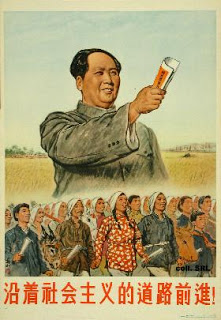
"In a process of collectivization that started in 1953, the farmers were first organized in so-called mutual help teams. These were gradually merged into lower agrarian cooperatives. During the Great Leap Forward, these lower forms of cooperatives would be merged into huge People's Communes." blog.rollom.com
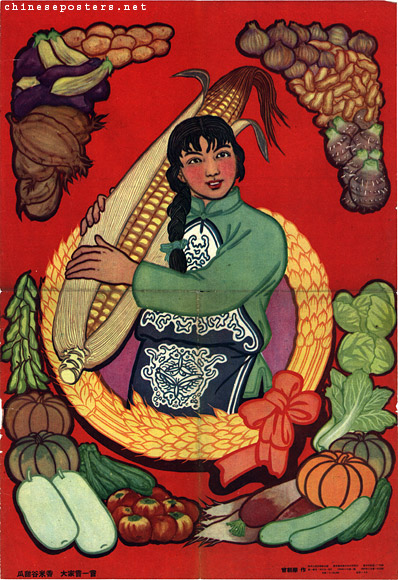
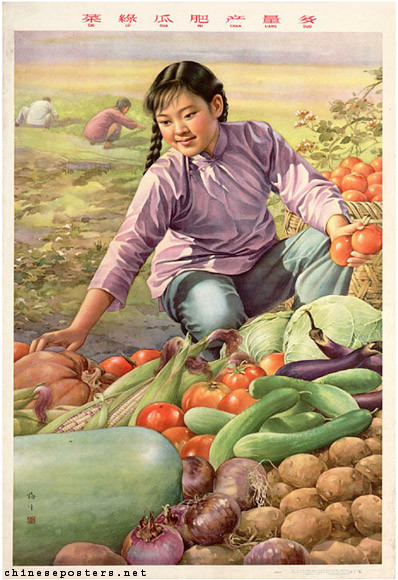
"The melons are sweet, grain and rice are fragrant, everybody tries the flavor." chineseposters.net
"A propaganda during the Great Leap Forward Campaign showing a great harvest." yoshigeneral.wordpress.com
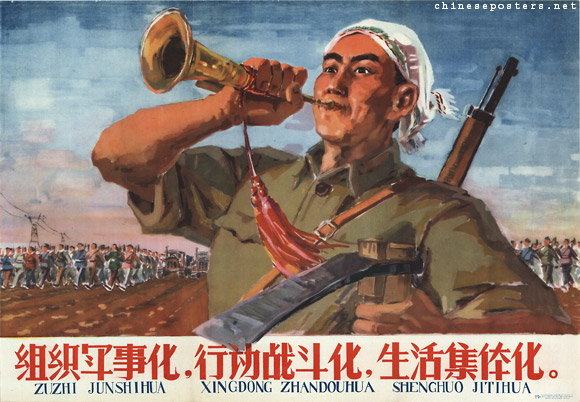
"Put organizations on a military footing, put actions on a war footing, put life on a collective footing." chineseposters.net
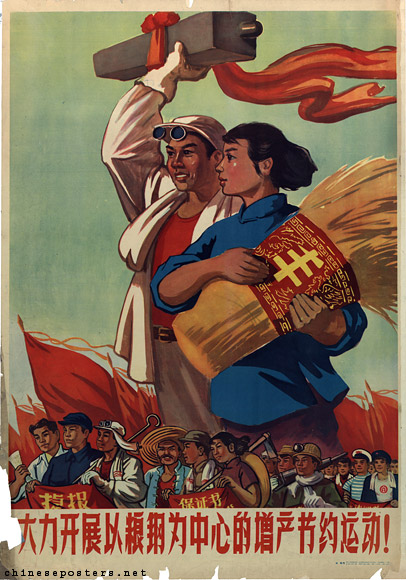
"Start the movement to increase production and practise thrift, with foodstuffs and steel at the center, with great force!" chineseposters.net
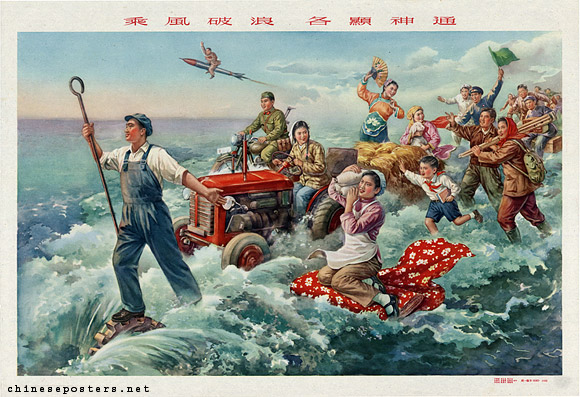
"Brave the wind and the waves, everything has remarkable abilities." chineseposters.net

"Chairman Mao has said, 'You young people are in the bloom of life like the sun at eight or nine in the morning.' You must set new records!"
                                                                                                                                                                                                        -China: A Century of Revolution: Part II
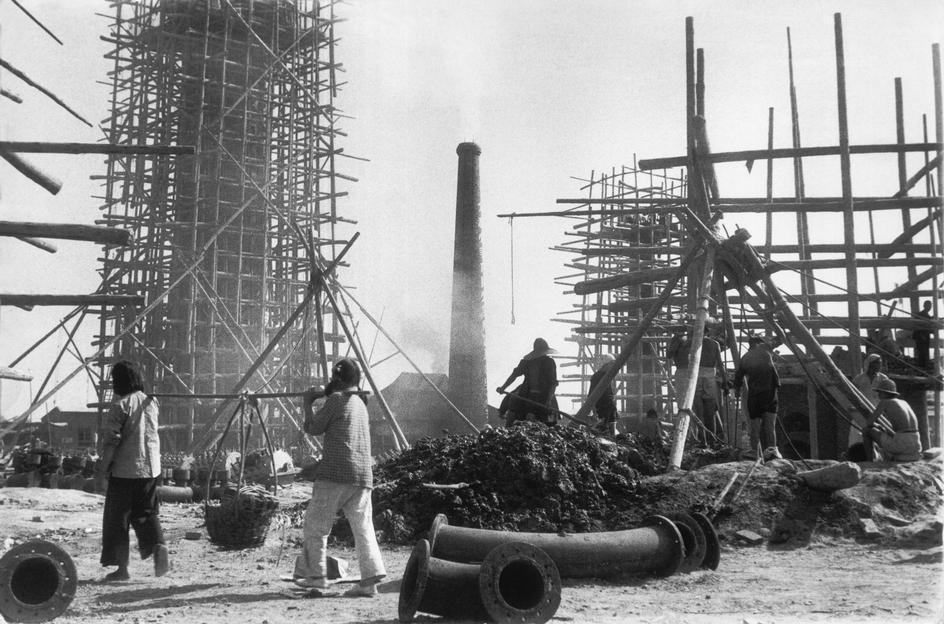
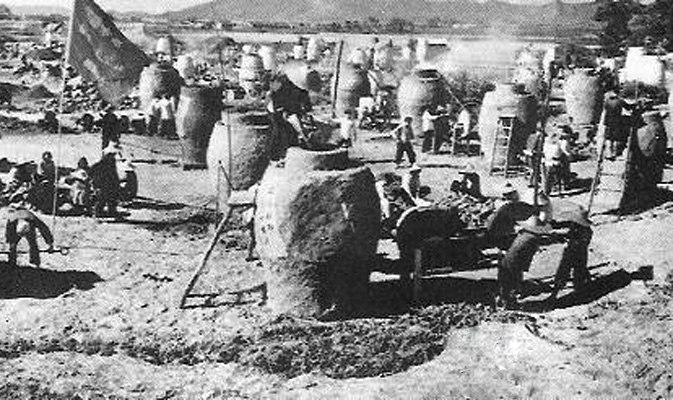
"CHINA. The 'Great Leap Forward.' 1958. Commune of Shiu Shin (310.000 inhabitants living in 280 villages divided into 7 Popular Communes spread over 600 square kilometers). Peasants work their own windboxes on the blast furnaces. Each thirty minutes, some 50 kilos of iron is smelted in the several hundred ovens." magnumphotos.com
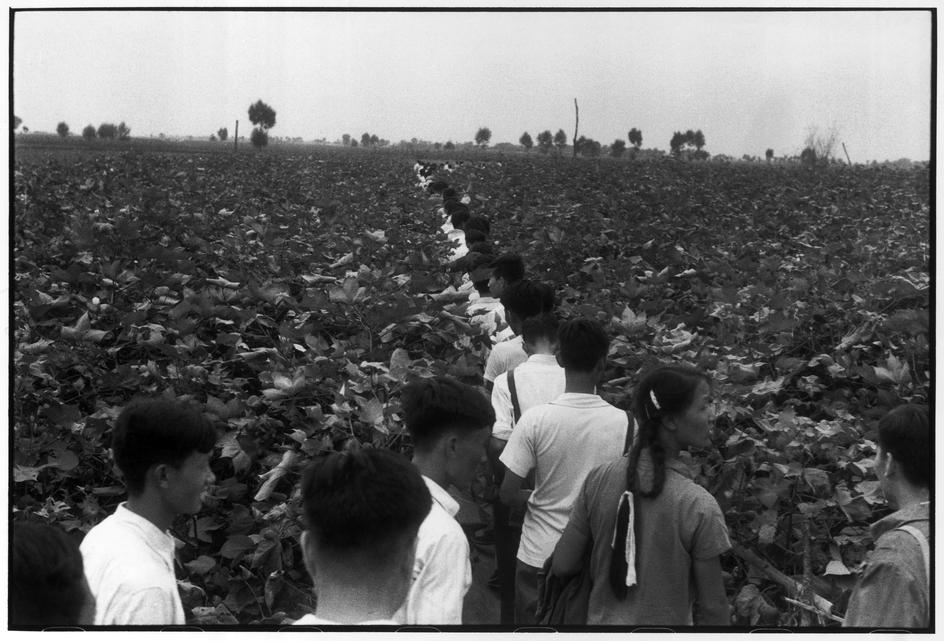
"CHINA. The 'Great Leap Forward.' 1958. A unit going to work in the fields. Commune of Shiu Shin (310.000 inhabitants living in 280 villages divided into 7 Popular Communes spread over 600 square kilometers)." magnumphotos.com
"Iron smelting and steel making in the Shaoyang Special Administrative Region, Hunan Province, are rapidly developing on a mass scale. In a short period in the autumn of 1958, 12,378 local blast furnaces were built in this area." bhoffert.faculty.noctrl.edu
"Grain production increased only 1 percent over the year, in the face of a 2 percent population rise. ... Mao’s emerging response to the disappointing agricultural production on the cooperative farms was a strategy of heightened production through moral incentives and mass mobilization under the direction of inspirational local party leaders." bhoffert.faculty.noctrl.edu
"... the diversion of resources into local backyard steel furnaces — 1 million had been scattered across the face of China — did not pay off, since the furnaces were not able to produce a high-standard product." bhoffert.faculty.noctrl.edu
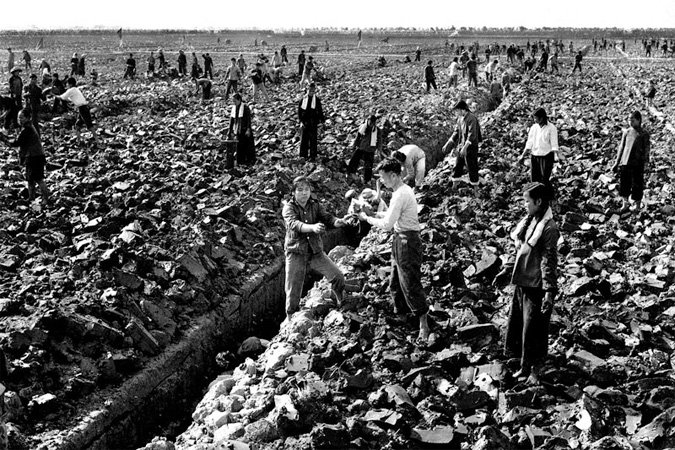
"CHINA. The "Great Leap Forward." Beijing. 1958. Students plunge into a swampy bog in order to make themselves a swimming pool rather than wait for unavailable machinery." magnumphotos.com

"Mao had introduced the Great Leap Forward with the phrase 'it is possible to accomplish any task whatsoever.' By the end of 1958, it seemed as if his claim was true."
                                                                                                                                                                                                          -The Great Leap Forward
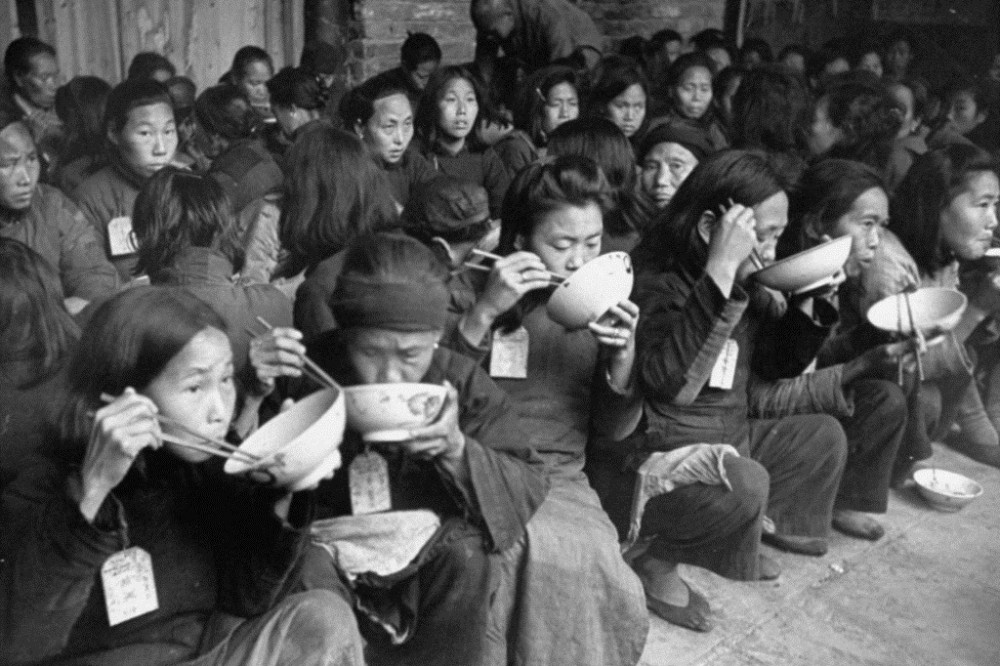

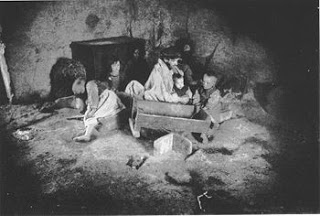
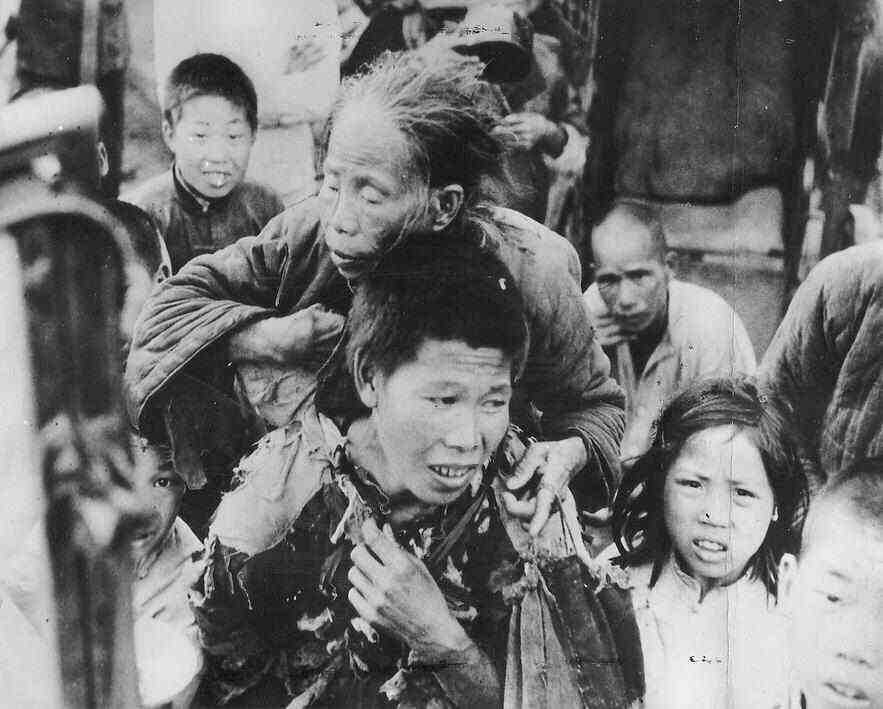
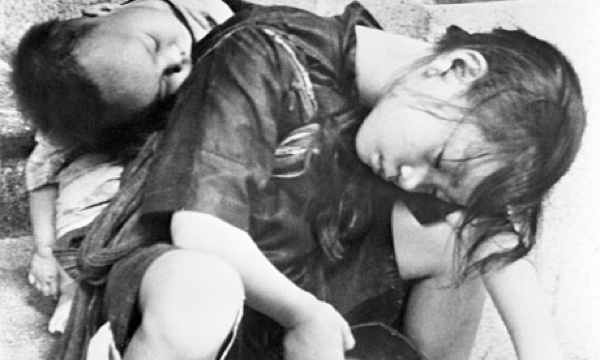
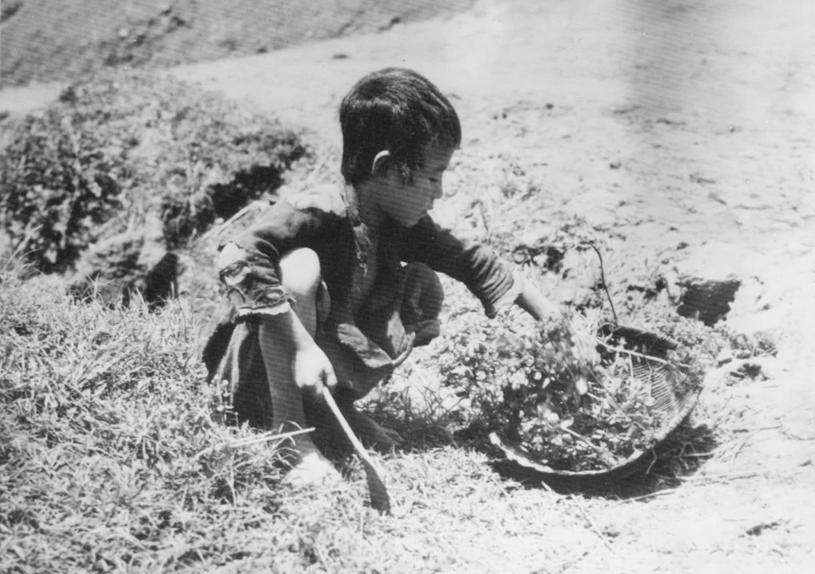
"The Great Leap Forward, China: Initiated by Mao this agricultural revolution caused a famine which killed millions of Chinese between 1958 to 1961." www.colblog.com
"In the end, through a combination of disastrous economic policy and adverse weather conditions, an estimated 20 to 48 million people died in China. Most starved to death in the countryside." asianhistory.about.com
"The poor weather added on to this problem resulting in the worst famine that China has ever had. It was very sad to know how many people had died from this famine—estimation of over 15 million deaths." thewonderfulhistoryofchinab3.blogspot.com
"Chinese peasants describe this period as the ‘three bitter years’, which is something of an understatement. Several decades later the Chinese economy became the largest in the world – but at quite a price." listverse.com
"These failed policies, teamed with a flood in 1959 and a drought in 1960, affected the entirety of the Chinese nation. By the time the Great Leap Forward had ended in 1962, 43 million Chinese had died from the famine." listverse.com
"The extent of Mao's knowledge of the cruelty of the situation has been argued. Mao's physician said that he believed that he had not been noticing the extent of the Great Chinese Famine. This happened partly because there was hesitation to comment his rules and choices and plus his staff's eagerness to exaggerate or outright reports which were not true on food production. The Great Leap Forward. When figuring out the extent of the starvation to the peasants, Mao tried to act as if he was a good leader by fasting, but the truth is that he was never a really good leader." projects.vestavia.k12.al.us

"9 million people are thought to have starved to death in 1960 alone; many millions were left desperately ill as a result of a lack of food. The government had to introduce rationing. This put people on the most minimal of food and between 1959 and 1962, it is thought that 20 million people died of starvation or diseases related to starvation."
                                                                                                                                                                                                                                                                                                                                 -The Great Leap Forward


Idolized by His People
Cultural Revolution
Vivian Chow
The Shift in Leadership: The Great Leap Forward
Senior Division
Number of Student-Composed Words: 1199
Number of Words in Process Paper: 493

Site size: 34 MB